Microchip Requirements Delayed

Please read this important statement affecting the remainder of the 2026 competition year.


FOR EVERYONE ENTRING USEF LICENSED OR ENDORSED COMPETITIONS: GR 1101.10
MICROCHIPS: THIS IS WHAT YOU NEED TO KNOW

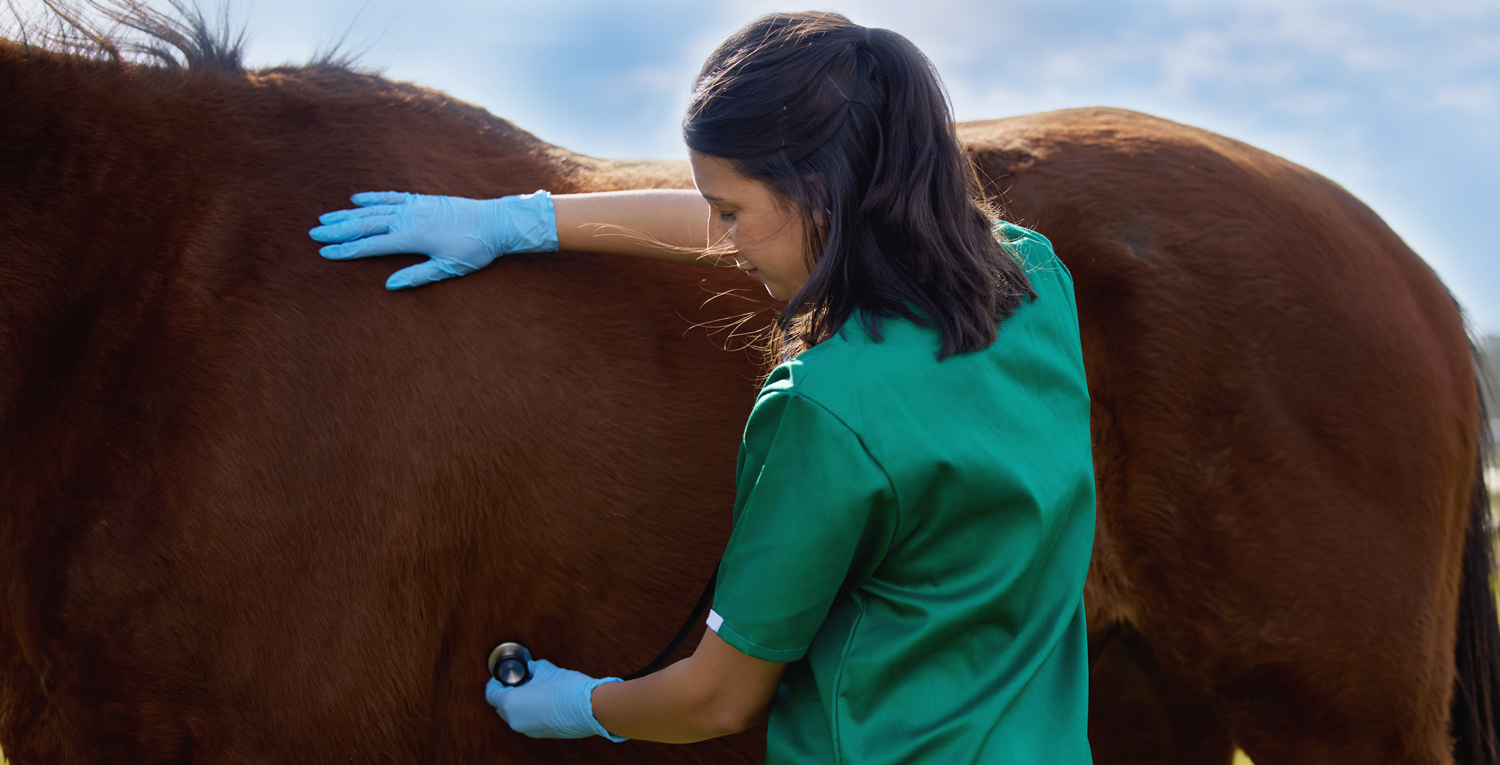
USEF competition horses must have a ISO compliant (11784/11785) microchip embedded in their nuchal ligament, and the number recorded by USEF, by December 1st, 2025. It is the owner/riders responsibility to be sure this has been done.

If you are certain your horse(s) are microchipped, confirm that the number is recorded on the USEF website.

  1. Sign in to your account www.usef.org
  2. Click (upper right) account icon
  3. Click my dashboard icon
  4. Scroll down to your horses
  5. Click each horse
  6. Confirm that there is a 15-digit microchip number in the horse information section. No letters.

If your horse has been microchipped but you are unsure if it is ISO compliant:

  1. The number should have 15 digits, no letters
  2. The radio frequency should be 134.2 kHz. (From the packaging or your vet might know.)
  3. Biothermal chips are compliant
  4. Most “breed chips” are compliant; check for 15 digits and the kHz.
  5. Be sure this is recorded on the USEF website (as described above).

If your horse has not been microchipped, you can arrange for this by your local veterinarian.

  1. The cost is modest; most of your fee will be the vet visit cost.
  2. Placement does not require sedation; the insertion needle is about the size of a vaccination needle, and any initial swelling is minor. There is no “downtime.”
  3. Follow the steps above to record the number on the USEF website.

Questions?
Cflippa16@gmail.com

Please click button above for a printable PDF of this information.

Musical Freestyle Judging Program

DVCTA Presents USDF Continuing Education in Musical Freestyle Judging Program

A 2-day USDF accredited Continuing Education Program open to all judges, L program graduates, and auditors. This Continuing Education in Freestyle Judging Program has been approved by USEF to count as advanced education for Judges. Judges who attend this program will be eligible to earn the “Judges Freestyle Designation” upon completion and passing the online exam. CLOSING DATE: 2/28/26

March 14, 2026
Lecture and Classroom Study
.

Stroud Water Research Center
970 Spencer Rd, Avondale, PA

March 15, 2026
Live Judging with Exhibition Ride

Windurra USA
2037 Newport Gap Pike (Rt 41), Cochranville, PA

Licensed Judges and L Program Graduates: $275 ($175 for DVCTA members)
Auditors and L Program Enrollees: $65/day or $90 for both days (FREE for DVCTA members)
Rider Participants: FREE

Any questions, contact Alice Morse at alicemorse@earthlink.net


Dolly Hannon, USEF “S” Dressage Judge with certification in Young Horses, Equitation, and Freestyle

Among her many jobs, Dolly is a faculty member for both the USDF L program and the USDF Instructor Development Program and is the former chairperson of the USDF Freestyle Committee (a member of the committee since 2006). She is a USEF R Judge in Western Dressage. She has competed extensively through Grand Prix winning many year-end awards from both USDF and RMDS (Rocky Mountain Dressage Society) and is a Bronze, Silver, and Gold medalist. She has been teaching, primarily dressage, for over 35 years!

DVCTA Annual Banquet

DVCTA Annual Banquet
February 22, 2026
12:30PM-4:30PM


Banquet Brunch will be held at:
Loch Nairn Farm
514 McCue Road
Avondale, PA 19311

Please come join your horsey friends, and their patient non-horsey guests, for our Annual Banquet. We have a fabulous venue – the Loch Nairn Farm!

It’s sure to be a great time with lively bidding on the DVCTA Silent Auction and the year-end award winners announced.

Tickets are $45.00 each. Family and friends are welcome!
Please complete form below.


This form is currently closed for submissions.

YEA Rider Medals

DVCTA Year End Awards Submission Form
Rider Medals

STEPS TO SUBMITTING FOR A DVCTA AWARD:

  1. Review the RULES here. Ensure you are meeting the medal’s level requirements:
    Dressage Rider Medals:
    a. BRONZE MEDAL: Six scores of 60% or above at Training Level. Must include three scores from test T3.
    b. SILVER MEDAL: Six scores of 60% or above at First and Second Levels. Must include three scores from First Level and Three Scores from Second Level. One score must be test 1-3 and one score from test 2-3 or two from test 2-3.
    c. GOLD MEDAL: Six scores of 58% or above at Third and Fourth Levels. Must include three scores from Third Level and Three Scores from Fourth Level. One score must be test 3-3 and one score from test 4-3 or two from test 4-3.
    d. For each level, scores submitted must be from at least four different judges and four different shows.

    Western Dressage Rider Medals:
    a. BRONZE MEDAL: Six scores of 60% or above at Basic Level. Must include three scores from test Basic-4.
    b. SILVER MEDAL: Six scores of 60% or above at Levels 1 and 2. Must include three scores from Level 1 and Three Scores from Level 2. One score must be test 1-4 and one score from test 2-4 or two from test 2-4.
    c. GOLD MEDAL: Six scores of 58% or above at Levels 3 and 4. Must include three scores from Level 3 and Three Scores from Level 4. One score must be test 3-4and one score from test 4-4 or two from test 4-4.
    d. For each level, scores submitted must be from at least four different judges and four different shows.

    Eventing Rider Medals:
    i. MEDAL LEVELS: Elementary, Introductory, Beginner Novice, Novice, Training.
    ii. Scores can be acquired on multiple horses
    iii. For each level, you must submit: three scores from at least two different venues earned in 2019 or later. Scores must have 40.0 or fewer penalties and zero XC jumping penalties to qualify.
  2. Be a fully-paid member of DVCTA in the award year.
  3. Complete 8 verified DVCTA Volunteer Hours or pay $20 per missing hour. Paypal payments can be submitted on Paypal to dvcta2011@gmail.com with a note as to what they are for.
  4. Submit this form only when complete with all required scores!
  5. The deadline for submitting scores is NOVEMBER 15, 2026, at midnight EST. Late submissions WILL NOT BE ACCEPTED. Please get your scores and volunteer hours in on time.
  6. Submit a separate award for each horse and rider combination and award level. You may submit for more than one horse but each must be a separate submission. Horses may be ridden by multiple riders. A horse and rider combination may earn year-end awards in two consecutive levels.
  7. Be accurate! Recognized dressage scores will be verified on USDF Score Check. For schooling dressage shows, horse trials and events, please email a scan or images of your test to awards@dvcta.org with the subject “Rider Medal”.
  8. Send a picture of you and your horse to awards@dvcta.org for the presentation.
  9. Come to the Awards Banquet and celebrate your accomplishments!
YEA Rider Medal – 2026
Were you a DVCTA Member for Award Year?
Do you have 8 Verified DVCTA Volunteer Hours?
Dressage: List your SIX qualifying scores as a rider. Make sure you meet the medal’s level requirements.

First Show


Second Show


Third Show


Fourth Show


Fifth Show


Sixth Show

YEA Form – Eventing

DVCTA Year End Awards Submission Form
Eventing and Combined Tests

STEPS TO SUBMITTING FOR A DVCTA AWARD:

  1. Review the RULES here.
  2. Be a fully-paid member of DVCTA in the award year.
  3. Complete 8 verified DVCTA Volunteer Hours or pay $20 per missing hour. Paypal payments can be submitted on Paypal to dvcta2011@gmail.com with a note as to what they are for.
  4. Submit this form only when complete with all required scores!
  5. Deadline for submission is November 15, 2026. Late submissions WILL NOT BE ACCEPTED. Please get your scores and volunteer hours in on time.
  6. Submit a separate award for each horse and rider combination and award level. You may submit for more than one horse but each must be a separate submission. Horses may be ridden by multiple riders. A horse and rider combination may earn year-end awards in two consecutive levels.
  7. Be accurate! Scores will be verified _____________________ or the results pages of the listed event. If questions arise, you will be asked to submit scans or images of your results.
  8. Send a picture of you and your horse to awards@dvcta.org for the presentation.
  9. Come to the Awards Banquet and celebrate your accomplishments!
YEA Eventing – 2026
If applicable.
Were you a DVCTA Member for Award Year?
Do you have 8 Verified DVCTA Volunteer Hours?
List your SIX BEST results from the qualifying period (November 16, 2025 and November 15, 2026) here. Results must be from an approved venue that posts results online (see rules for details). All phases of the competition must be completed for points to be earned: e.g. points will not be earned for a horse trial where either SJ or XC is not completed due to Withdrawal (W), Retired(R), Elimination (E), Technical Elimination (TE), or Rider Fall (RF).

First Event


Second Event


Third Event


Fourth Event


Fifth Event


Sixth Event

YEA Form – Dressage

DVCTA Year End Awards Submission Form
Dressage (USDF/FEI/WDAA)

STEPS TO SUBMITTING FOR A DVCTA AWARD:

  1. Review the RULES here.
  2. Be a fully-paid member of DVCTA in the award year.
  3. Complete 8 verified DVCTA Volunteer Hours or pay $20 per missing hour. Paypal payments can be submitted on Paypal to dvcta2011@gmail.com with a note as to what they are for.
  4. Submit this form only when complete with all required scores!
  5. The deadline for submitting scores is NOVEMBER 15, 2026. Late submissions WILL NOT BE ACCEPTED. Please get your scores and volunteer hours in on time.
  6. Submit a separate award for each horse and rider combination and award level. You may submit for more than one horse but each must be a separate submission. Horses may be ridden by multiple riders. A horse and rider combination may earn year-end awards in two consecutive levels.
  7. Be accurate! Scores will be verified on USDF Score Check or the results pages of the sanctioned schooling shows. If questions arise, you will be asked to submit scans or images of your test.
  8. Send a picture of you and your horse to awards@dvcta.org for the presentation.
  9. Come to the Awards Banquet and celebrate your accomplishments!
YEA Dressage – 2026
If applicable.
Were you a DVCTA Member for Award Year?
Do you have 8 Verified DVCTA Volunteer Hours

List your THREE BEST scores from the qualifying period (November 16, 2025 and November 15, 2026) here. Scores must be from three different shows and at least two different judges. With the exception of Intro level, FEI and Musical Freestyle, at least ONE must be at the highest test of the award level.

First Show


Second Show


Third Show

DVCTA ‘L’ Program Summary

Printable Article

The USDF ‘L’ program is the first step to becoming a Dressage Judge. The two-part ‘L’ program will take about one year to complete if run consecutively. Part 1, “A Judge’s Perspective,” consists of Session A, “An Introduction to Judging and Biomechanics”; Session B, “Judging Criteria for Gaits, Movements, and Figures”; and Session C, “Collective Marks, Equitation, Rider Biomechanics, and Basics”. Part 2, “Candidate’s Evaluation,” consists of Session D1, practice judging full test training level through second level tests at recognized shows, and Session D2, which is like D1 with emphasis on testing situations to prepare for the final exam. The final exam consists of a written and practical exam. Part 1 of the ‘L’ program is open to candidates as well as auditors. Part 2 is only for candidates. All candidates who pass the ‘L’ program are qualified to judge dressage schooling shows. Candidates who pass the ‘L’ program with distinction are eligible to apply for the USEF ‘r’ judging program.

On November 2nd and 3rd, 2024, DVCTA held Session A of the ‘L’ program. Debbie Rodriguez was the presenter. Saturday’s lecture was held at the New Bolten Center in Kennett Square, PA. The morning started with an introduction to judging. This included knowing and staying current on the rules, the length of time you are allowed to judge in one day, and how to conduct yourself in the judge’s box. Debbie offered her personal experiences including to be careful what you say to your scribe as your words can and will be taken out of context. As the judge it is your responsibility to keep the dressage ring safe, for example, if you see a loose horse in the ring next to yours you should stop your rider’s test until the horse is caught. You are also responsible for the horse’s well fair. If the horse is lame or you see blood anywhere on the horse, you must blow your whistle to stop the test and eliminate the rider.

Judging Methodology is the system every judge uses to arrive at the final score for each test move. The system consists of “B” = Basics/Biomechanics, “C” = Criteria of the exercise, and “M” = Modifiers. The Basics, did the purity and quality of the gaits remain consistent? The Criteria, did the horse and rider perform the move as defined in the USDF rule book? The Modifiers are used to raise or lower the score, for example, did the horse perform the move in balance with the correct amount of bend for the level?

● The formula is expressed as: (B+C) +/- M = Score

The judging scale consists of scores ranging from 0 (move not executed) through 10 (Excellent) with each score in between. For example, 6 (Satisfactory) means you performed the basics and criteria of the move as described in the USDF rule book. To earn a 7 (Fairly Good) for the same move you would meet the criteria with better connection and balance. For dressage shows, you can also use half points.

As a judge, you want to give comments that match your score. Your comments should be helpful to the rider without instructing them how to fix the move.

Sunday morning was also at New Bolten Center. Debbie Rodriguez showed videos of dressage tests asking the candidates to score the horse’s gaits as low, medium, or high based on the rhythm and tempo at the walk, trot, and canter. Debbie Rodriguez showed a slide of a sumo wrestler vs. a ballerina which I found very helpful. She explained that if the horse moves with his four legs at their widest, the rider will have little influence, but if the rider works to narrow the horse’s base by bringing the hind legs more under the center of the horse, they can perform the moves for higher scores.

Sunday afternoon was spent watching horses and riders at the Stables at Fox Crossing Farm. There were training level, first level, and second level groups of 3 to 4 horses each. Debbie Rodriguez asked the riders in each group to walk, trot, and canter, allowing the candidates to compare and score each horse’s gaits as low, medium, or high. She then had one rider at a time perform a move from each level, for example, the first level group showed a leg yield, again having the candidates compare and score the moves. At the end of each group, one rider rode a complete test.

DVCTA held session B of the ‘L’ program on January 11th and 12th, 2025. Kathy Rowes presented. Discussions for session B included: the Purpose of the training through second level tests, criteria of the gaits and movements, giving accurate comments that address what is happening in the arena and match your score, and giving comments that are constructive using appropriate vocabulary.

Saturday and Sunday morning sessions were held at the New Bolten Center. Scorecards with numbers 1 through 10 and .5 were provided for each candidate. On Saturday, Kathy Rowe showed videos of horses performing the moves for Intro through the first level test and the candidates held up the score they would give. Amer some discussion, Kathy would give her score. Second level is the first time horses are required to show collection and uphill balance; it was the topic for Sunday Morning.

Kathy Rowes broke down steps for judging the turn on the haunches as this is one of the most difficult to judge. First, deal with the legs, do they stay active with the correct rhythm? Second, deal with the bend, is it in the correct direction? Third, deal with the size of the turn on the haunches as it can be up to 1 meter in diameter.

Saturday afternoon’s training and first level demo were held at the Stables at Fox Crossing Farm. The horses and riders were exceptional. The candidates used their score cards to judge the moves along with supplying comments.

Sunday afternoon’s second level demo rides were also held at the Stables at Fox Crossing Farm. The candidates did an amazing job of judging with many agreeing with Kathy Rowe’s scores.

Session C of the ‘L’ program, “Collective Marks”, was held March 8th and 9th, 2025 by DVCTA. International Judge Mike Osinski was the presenter. Saturday started with a video of Mike Osinski judging the 2024 Paris Olympics and wonderful stories of how judging dressage has taken him worldwide, judging the best of the best.

Saturday’s lecture was held at New Bolton Center. The theme was Collective Marks and final comments. The Collective Marks reflect the individual moves throughout the test. Mike Osinski explained that if your scores for the individual moves are 6 to 7, you wouldn’t give an 8 for the Gaits score. The same applies for the Submission score; if the horse was resistant and above the bit on several moves scoring 5 to 6, your Submission score will also be 5 or 6. Amer watching a video of a pony at training level who appeared to be cruising around the test performing the moves, Mike asked for the Submission score. Then he explained the pony wasn’t submissive as the rider hadn’t asked for the moves. I found this to be an eye-opener.

Impulsion is the desire to move forward, elasticity of the steps, suppleness of the back, and engagement of the hindquarters. Indicators of Impulsion are articulation of the hocks with over stride, freedom in the shoulders, and lightness of the front legs. Mike Osinski explained the difference between impulsion and running.

The Collective marks include 2 rider scores.

• Rider’s Position and Seat
• Rider’s Correct and Effective use of aids

Rider’s Position and Seat are the alignment, stability, weight placement, along with the rider’s ability to follow their horse’s movements.

Rider’s Correct and Effective use of aids includes an independent and stable seat and legs. Geometry and accuracy of the test are included in this score.

Sunday was the time to apply the lessons learned on Saturday. Demo riders and horses rode training, first, and second level tests. Amer each test, the candidates took turns giving their scores and comments for each move, the Collective marks, and the final comments.

Thank you DVCTA for the opportunity to audit the “L” program. This was a wonderful and educational experience. I recommend it to all dressage riders.

DVCTA Volunteer Awards for 2020

The year 2020 was a unique time because of dealing with Covid-19.  It was a year of “learning as you go” when dealing with changing safety regulations at horse events.  DVCTA would like to Thank all the volunteers who came out to ensure that we had shows to ride at during the 2020 show season.

Above and Beyond Volunteers

Becky (Wolfe) Lynch104 hours
Linda Swank95 hours
Joan Chain79 hours
Kelly Barry69 hours
Betty Lewandowski50 hours

Gold Level Volunteers

Laura Adriaanse
Gail Bergstron
Mike Broomall
Jennifer Downey
Linda Drejza
Eliza Herman
Jen Holmquest
Alex James
Michele Karpovich-Staib
Lisa Know
Lisa Leana
Maryanne Luke
Megan Mendenhall
Ann Miller
Darcy Miller
Kris Poole
Sharon Sexton
Emma Stanton

Silver Level Volunteers

Bonnie MacCulloch
Karen Rubin
Rachel Staib
Adelynn Young

Bronze Level Volunteers

Merrilyn Ratliff
Sydney Salle


Due to the Covid-19 Pandemic, we are making a few changes to the DVCTA Volunteer Program for this calendar year. We understand that our shows and events cannot be held without our wonderful volunteers. But we also recognize that during the pandemic, in order to ensure social distancing, there should not be extra people at events. Therefore, the DVCTA Board has waived the volunteer requirement for Year-End High Score Awards. In order to recognize the individuals that are willing to volunteer this year, we have adjusted the requirements for Year-End Volunteer Awards:

Bronze – 5 hours
Silver – 8 hours
Gold – 12 + hours

These changes are only in effect for the calendar year of 2020.

Dressage Judge

Description:

Dressage judging and clinics.
Licenses:
USEF ‘r’ Dressage
USEF ‘r’ Sport Horse
USEF ‘R’ Western Dressage

USDF Bronze and Silver Medals (ridden side saddle)
USPC graduate ‘A’
USPC National Examiner
Sided Saddle Association and International Side Saddle Association judge and instructor
USDF Historical and Sport Horse Committee member


Contact: Anne Moss

Email: annemoss380@gmail.com

Cell Phone: 610-316-4294