The USDF ‘L’ program is the first step to becoming a Dressage Judge. The two-part ‘L’ program will take about one year to complete if run consecutively. Part 1, “A Judge’s Perspective,” consists of Session A, “An Introduction to Judging and Biomechanics”; Session B, “Judging Criteria for Gaits, Movements, and Figures”; and Session C, “Collective Marks, Equitation, Rider Biomechanics, and Basics”. Part 2, “Candidate’s Evaluation,” consists of Session D1, practice judging full test training level through second level tests at recognized shows, and Session D2, which is like D1 with emphasis on testing situations to prepare for the final exam. The final exam consists of a written and practical exam. Part 1 of the ‘L’ program is open to candidates as well as auditors. Part 2 is only for candidates. All candidates who pass the ‘L’ program are qualified to judge dressage schooling shows. Candidates who pass the ‘L’ program with distinction are eligible to apply for the USEF ‘r’ judging program.
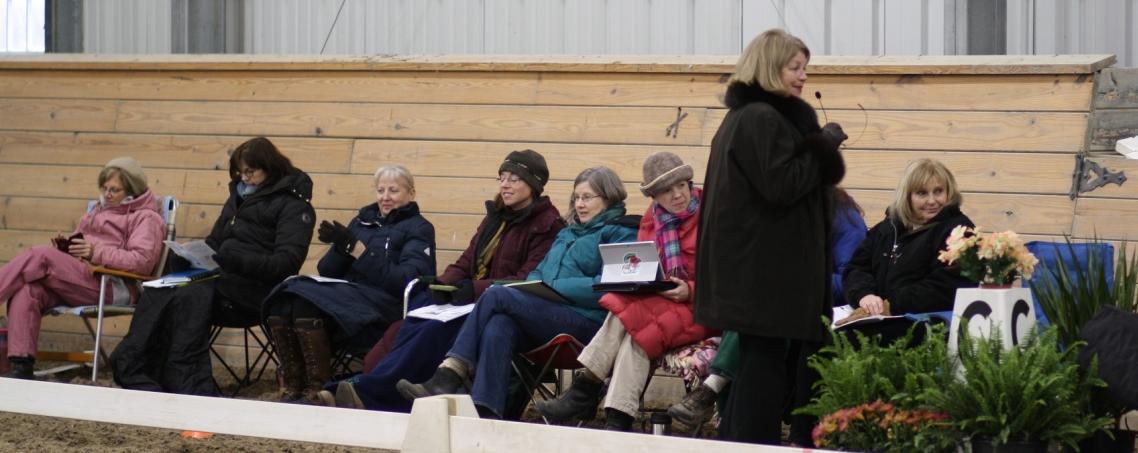
On November 2nd and 3rd, 2024, DVCTA held Session A of the ‘L’ program. Debbie Rodriguez was the presenter. Saturday’s lecture was held at the New Bolten Center in Kennett Square, PA. The morning started with an introduction to judging. This included knowing and staying current on the rules, the length of time you are allowed to judge in one day, and how to conduct yourself in the judge’s box. Debbie offered her personal experiences including to be careful what you say to your scribe as your words can and will be taken out of context. As the judge it is your responsibility to keep the dressage ring safe, for example, if you see a loose horse in the ring next to yours you should stop your rider’s test until the horse is caught. You are also responsible for the horse’s well fair. If the horse is lame or you see blood anywhere on the horse, you must blow your whistle to stop the test and eliminate the rider.
Judging Methodology is the system every judge uses to arrive at the final score for each test move. The system consists of “B” = Basics/Biomechanics, “C” = Criteria of the exercise, and “M” = Modifiers. The Basics, did the purity and quality of the gaits remain consistent? The Criteria, did the horse and rider perform the move as defined in the USDF rule book? The Modifiers are used to raise or lower the score, for example, did the horse perform the move in balance with the correct amount of bend for the level?
● The formula is expressed as: (B+C) +/- M = Score
The judging scale consists of scores ranging from 0 (move not executed) through 10 (Excellent) with each score in between. For example, 6 (Satisfactory) means you performed the basics and criteria of the move as described in the USDF rule book. To earn a 7 (Fairly Good) for the same move you would meet the criteria with better connection and balance. For dressage shows, you can also use half points.
As a judge, you want to give comments that match your score. Your comments should be helpful to the rider without instructing them how to fix the move.
Sunday morning was also at New Bolten Center. Debbie Rodriguez showed videos of dressage tests asking the candidates to score the horse’s gaits as low, medium, or high based on the rhythm and tempo at the walk, trot, and canter. Debbie Rodriguez showed a slide of a sumo wrestler vs. a ballerina which I found very helpful. She explained that if the horse moves with his four legs at their widest, the rider will have little influence, but if the rider works to narrow the horse’s base by bringing the hind legs more under the center of the horse, they can perform the moves for higher scores.
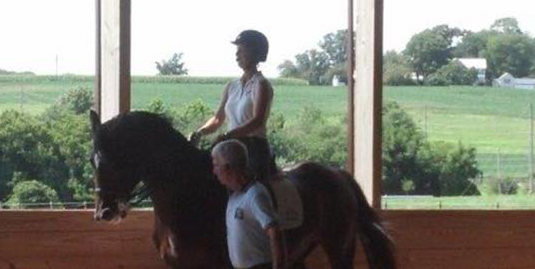
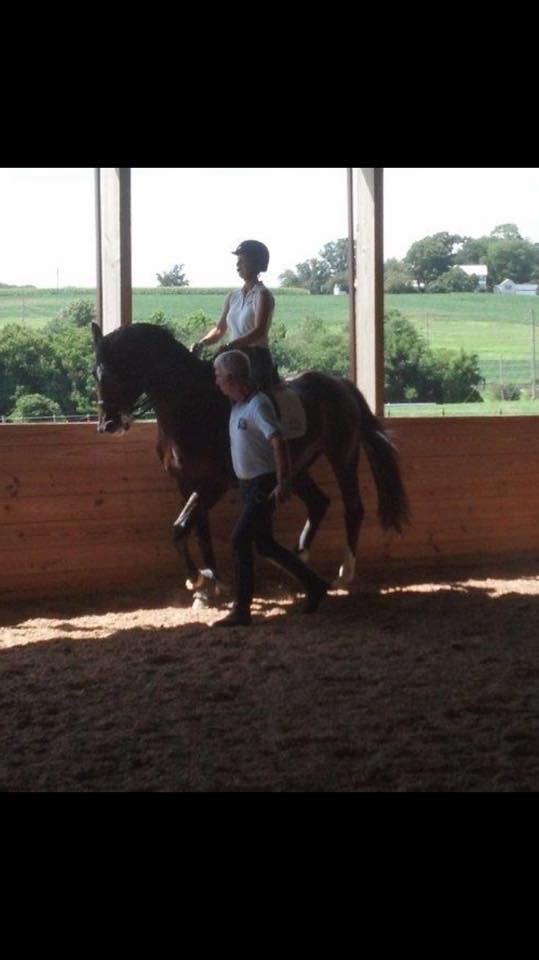
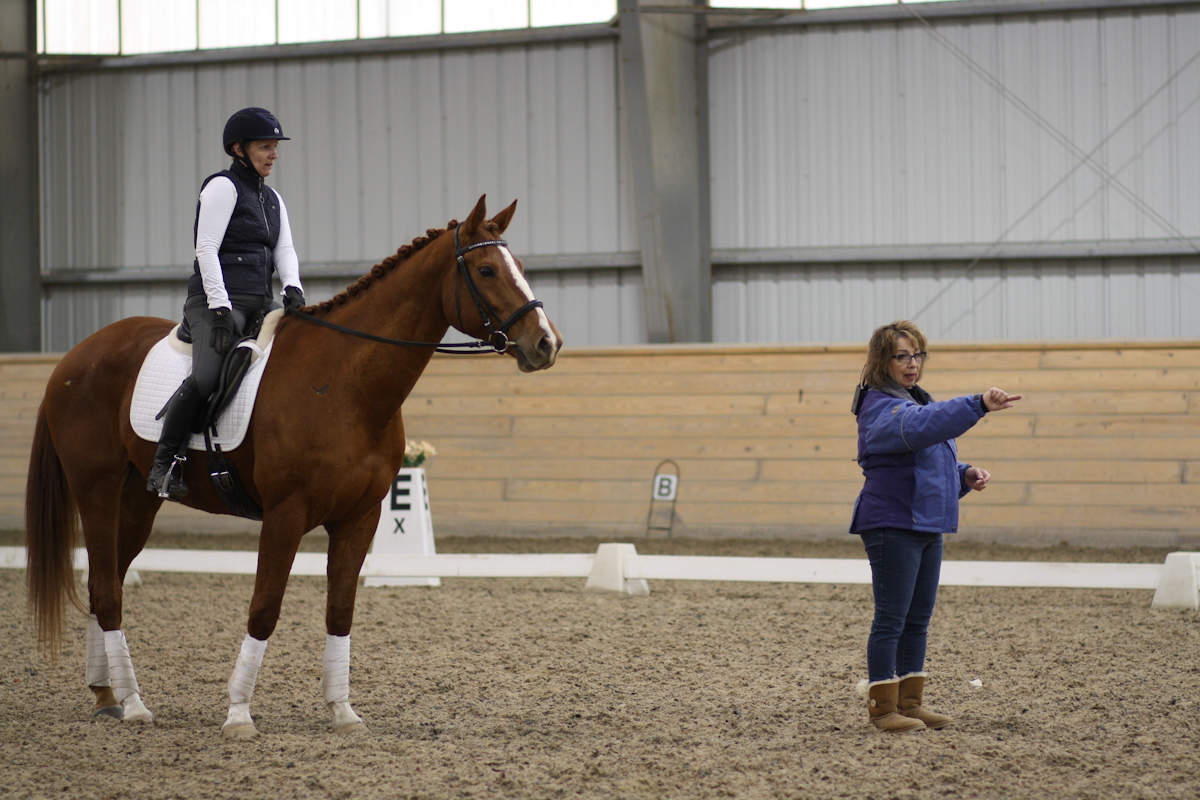
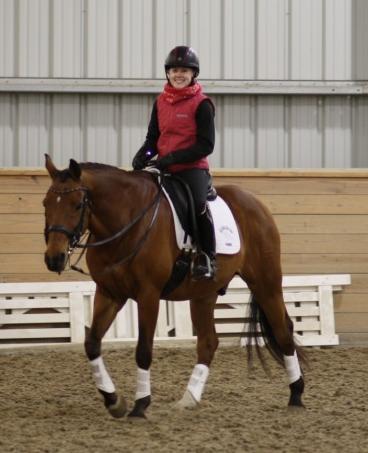
Sunday afternoon was spent watching horses and riders at the Stables at Fox Crossing Farm. There were training level, first level, and second level groups of 3 to 4 horses each. Debbie Rodriguez asked the riders in each group to walk, trot, and canter, allowing the candidates to compare and score each horse’s gaits as low, medium, or high. She then had one rider at a time perform a move from each level, for example, the first level group showed a leg yield, again having the candidates compare and score the moves. At the end of each group, one rider rode a complete test.
DVCTA held session B of the ‘L’ program on January 11th and 12th, 2025. Kathy Rowes presented. Discussions for session B included: the Purpose of the training through second level tests, criteria of the gaits and movements, giving accurate comments that address what is happening in the arena and match your score, and giving comments that are constructive using appropriate vocabulary.
Saturday and Sunday morning sessions were held at the New Bolten Center. Scorecards with numbers 1 through 10 and .5 were provided for each candidate. On Saturday, Kathy Rowe showed videos of horses performing the moves for Intro through the first level test and the candidates held up the score they would give. Amer some discussion, Kathy would give her score. Second level is the first time horses are required to show collection and uphill balance; it was the topic for Sunday Morning.
Kathy Rowes broke down steps for judging the turn on the haunches as this is one of the most difficult to judge. First, deal with the legs, do they stay active with the correct rhythm? Second, deal with the bend, is it in the correct direction? Third, deal with the size of the turn on the haunches as it can be up to 1 meter in diameter.
Saturday afternoon’s training and first level demo were held at the Stables at Fox Crossing Farm. The horses and riders were exceptional. The candidates used their score cards to judge the moves along with supplying comments.
Sunday afternoon’s second level demo rides were also held at the Stables at Fox Crossing Farm. The candidates did an amazing job of judging with many agreeing with Kathy Rowe’s scores.
Session C of the ‘L’ program, “Collective Marks”, was held March 8th and 9th, 2025 by DVCTA. International Judge Mike Osinski was the presenter. Saturday started with a video of Mike Osinski judging the 2024 Paris Olympics and wonderful stories of how judging dressage has taken him worldwide, judging the best of the best.
Saturday’s lecture was held at New Bolton Center. The theme was Collective Marks and final comments. The Collective Marks reflect the individual moves throughout the test. Mike Osinski explained that if your scores for the individual moves are 6 to 7, you wouldn’t give an 8 for the Gaits score. The same applies for the Submission score; if the horse was resistant and above the bit on several moves scoring 5 to 6, your Submission score will also be 5 or 6. Amer watching a video of a pony at training level who appeared to be cruising around the test performing the moves, Mike asked for the Submission score. Then he explained the pony wasn’t submissive as the rider hadn’t asked for the moves. I found this to be an eye-opener.
Impulsion is the desire to move forward, elasticity of the steps, suppleness of the back, and engagement of the hindquarters. Indicators of Impulsion are articulation of the hocks with over stride, freedom in the shoulders, and lightness of the front legs. Mike Osinski explained the difference between impulsion and running.
The Collective marks include 2 rider scores.
• Rider’s Position and Seat
• Rider’s Correct and Effective use of aids
Rider’s Position and Seat are the alignment, stability, weight placement, along with the rider’s ability to follow their horse’s movements.
Rider’s Correct and Effective use of aids includes an independent and stable seat and legs. Geometry and accuracy of the test are included in this score.
Sunday was the time to apply the lessons learned on Saturday. Demo riders and horses rode training, first, and second level tests. Amer each test, the candidates took turns giving their scores and comments for each move, the Collective marks, and the final comments.
Thank you DVCTA for the opportunity to audit the “L” program. This was a wonderful and educational experience. I recommend it to all dressage riders.